Folding carton specification, explained
What a folding carton specification covers
We are a direct European manufacturer of printed folding cartons, based in Wrocław, Poland. We have been printing for businesses since 2000.
A complete specification gets you a quote you can compare and fewer questions back and forth. It has six parts: size, board, print, finishes, closure and bottom, and gluing. Below we go through each one and say what we make.
Quantities and lead times are agreed in the quote. Tell us roughly how many cartons you need and we will price a few options; the unit price falls as the quantity grows.
Size
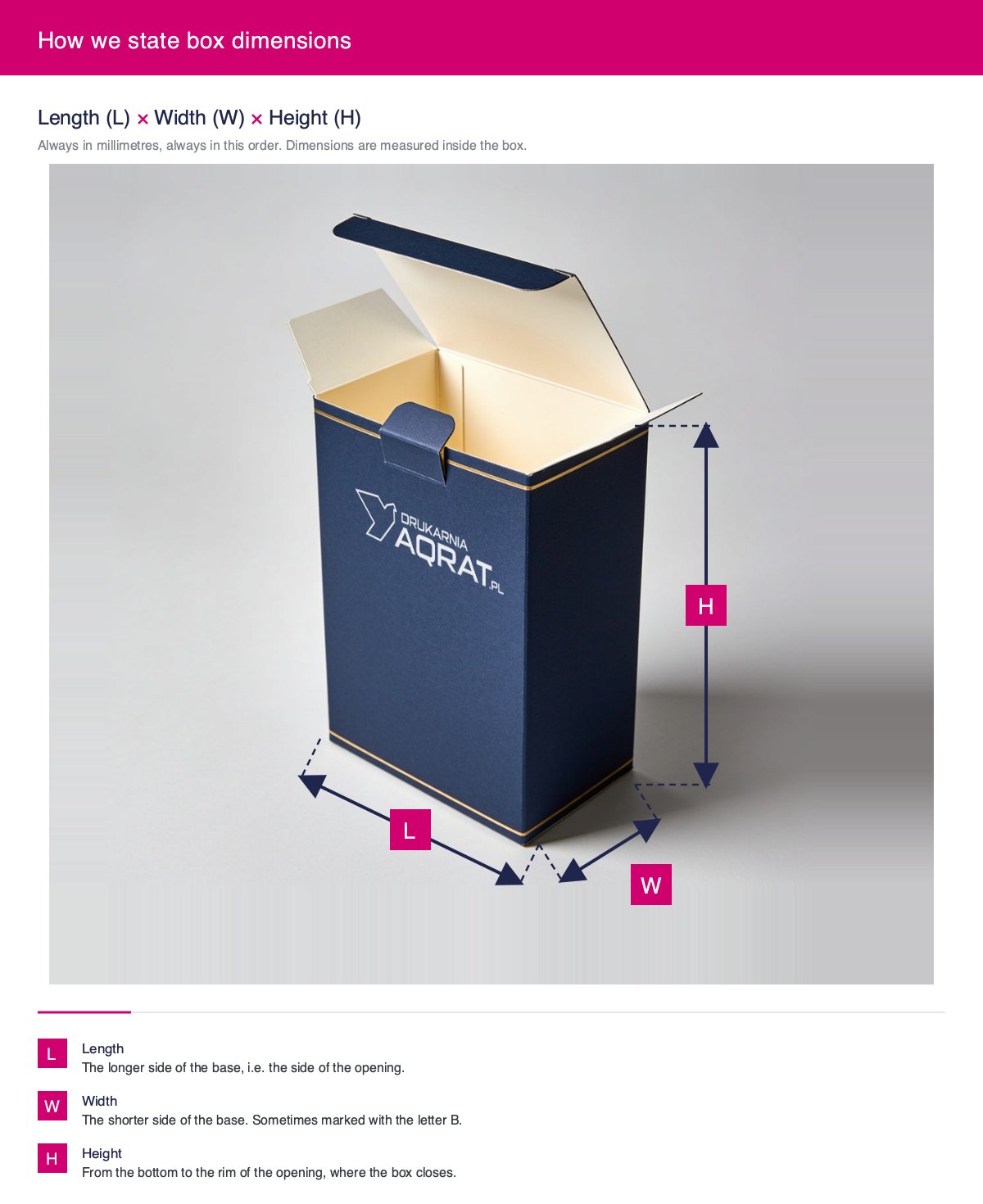
Give the inner size in millimetres, in the order length × width × height. Length and width describe the opening, height runs from the opening to the bottom. A size taken from the product itself is fine too; say which one you are giving.
The sample carton is printed digitally, so you see the print and the construction before the run. The production run is printed in offset.
Artwork: a print-ready PDF in CMYK with 2 mm bleed, fonts and logos converted to curves, transparency flattened.
Board
- Coated board in the weights usual for folding cartons, printed directly; we confirm the weight for each project
- Board dyed through in colour: the edge shows the colour of the board, the surface is matt and needs no lamination
- Laminated board, two layers bonded together, for example 300 g/m² with 170 g/m² or 250 g/m² with 150 g/m²
- FSC-certified paper and board available on request
If your specification names a board grade, for example GC1 or GC2, put it in the enquiry. The quote states the board we will use.
Finishes
- Gloss lamination, for a shiny finish.
- Matt lamination. Matt film gives the print a slightly warmer, yellowish tone, worth knowing for white and pastel designs.
- Soft-touch lamination: a velvety surface; it costs more than standard film and can lift on the folds.
- Spot UV varnish, kept back from the cutting edge.
- Gold hot foil stamping and cold foil.
- Embossing.
Closures and bottoms on our dielines
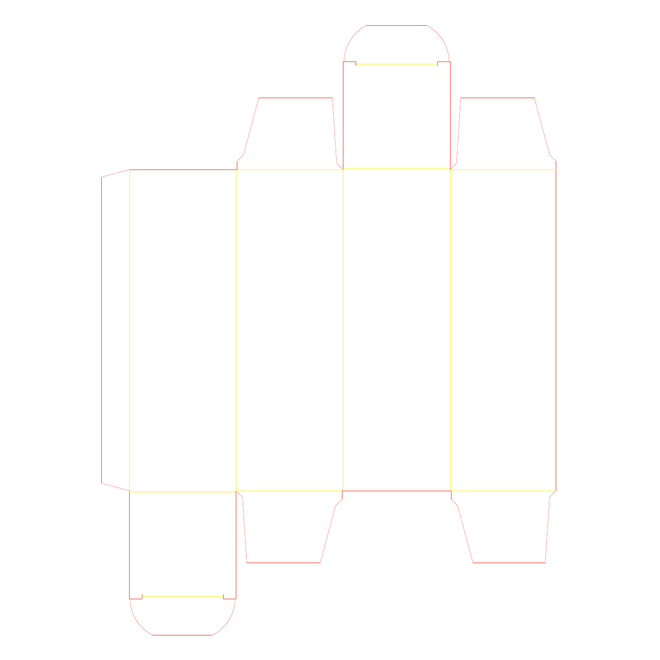 Tuck-in flaps at both ends
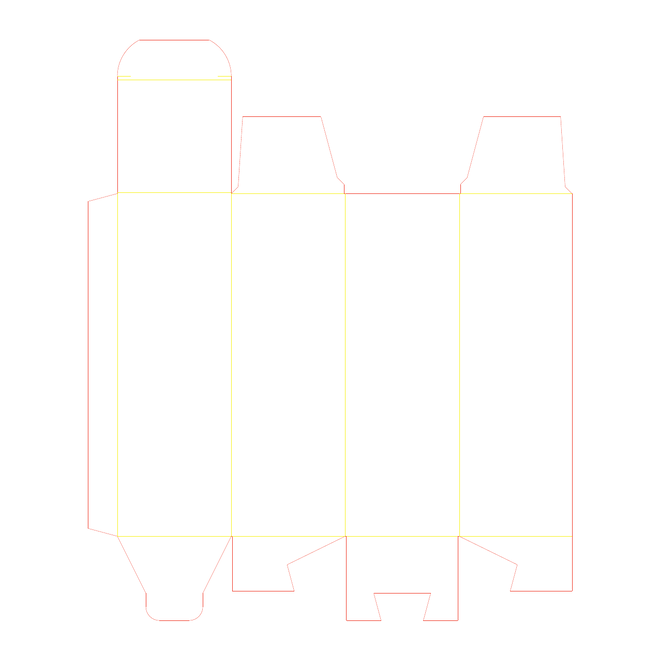 Bottom flaps that lock without glue
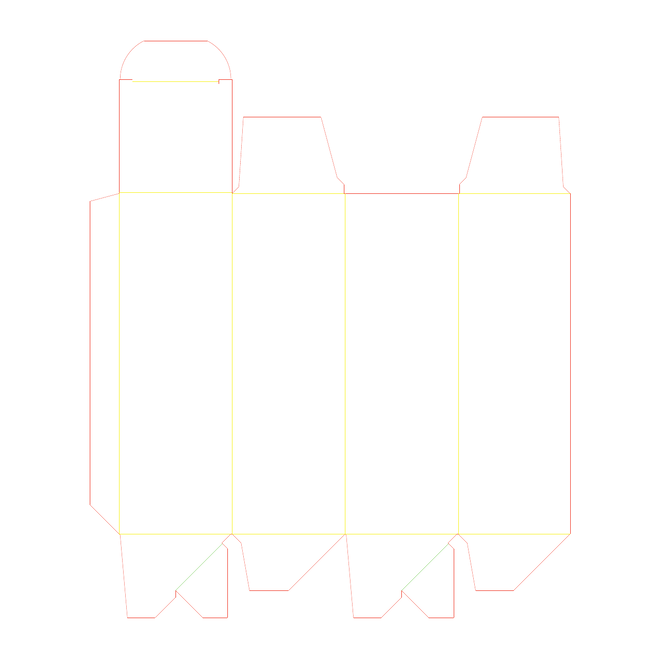 Glued bottom
Closure and bottom
A folding carton has two ends, and the specification should say how each one closes.
- Tuck-in top flap. The flap tucks into a lock, with no glue at the top. It closes quickly by hand and opens and closes many times. We make it in two variants that differ in the layout of the flap and the lock. Typical for lighter products and retail boxes.
- Folding bottom. The bottom flaps lock into each other when the carton is set up, without glue. Quick to assemble and holds medium-weight products well.
- Glued bottom. The bottom flaps are glued. It is the strongest and most stable bottom, for heavier or more valuable products.
- Tear strip. A built-in strip that opens the carton.
A carton with a separate lid and base is a different construction. If you need one, say so in the enquiry.
Gluing
Where the glue goes follows from the construction. A tuck-in top needs none, a folding bottom needs none, and a glued bottom is glued along its angled flaps. A carton with a glued bottom travels flat.
If your specification asks for a particular gluing, for example one gluing point, or if the cartons will be set up by a machine, write it in the enquiry. We confirm the construction in the quote.
Checklist for your enquiry
- Product and inner size in mm
- Weight of the product, so we can suggest the bottom
- Board, or the grade you use now
- Print colours and finishes
- Closure at the top and the bottom
- Quantity and number of designs
- Delivery country
Where to go next
One carton in many versions? See how to order the same box in several designs. Cartons by product: cosmetic boxes, perfume boxes, chocolate and biscuit boxes, supplement boxes. A printed sleeve goes around a carton; more styles on small custom boxes. Ordering for the first time? Read how an order from Poland runs.
Folding carton specification: questions buyers ask
Which bottom should I choose?
A folding bottom assembles quickly without glue and suits medium-weight products. For heavier or more valuable products choose a glued bottom. Give the weight of the product and we will suggest one.
Matt or soft-touch lamination?
Soft-touch feels velvety but costs more and can lift on the folds. Matt film is the standard choice; it warms the print slightly, so check white and pastel colours on the sample.
Can a carton have a coloured edge without lamination?
Yes: board dyed through in colour shows the colour on the edge and has a matt surface without lamination.
Do you have a cutting die for my carton?
We have a library of cutting dies. If one fits your size, you do not pay for a new die; we check this when we prepare the quote.
Do you make a sample before production?
Yes. The sample carton is printed digitally; the production run is printed in offset.
Do you deliver outside Poland?
Yes. We deliver to businesses across Europe by courier or freight forwarder, in parcels or on pallets. Shipping is part of the price we quote.
How do invoicing and VAT work for companies in the EU?
We sell to businesses only. Payment is by bank transfer, usually in EUR, against an invoice with a payment term or in advance on a pro forma invoice. A company with a valid EU VAT number in another EU country is invoiced without Polish VAT (intra-Community supply).
Other products we make
- Small custom boxes
- Cosmetic boxes
- Supplement boxes
- Labels & hang tags
- User manuals & leaflets
- Paper bags
- Wall & desk calendars
- Notebooks & notepads
- Planners & organisers
- Catalogues & brochures
- Books
See what we have printed recently · About our printing house
Request a quote
Tell us what you need and roughly how many. We will come back to you with a price.